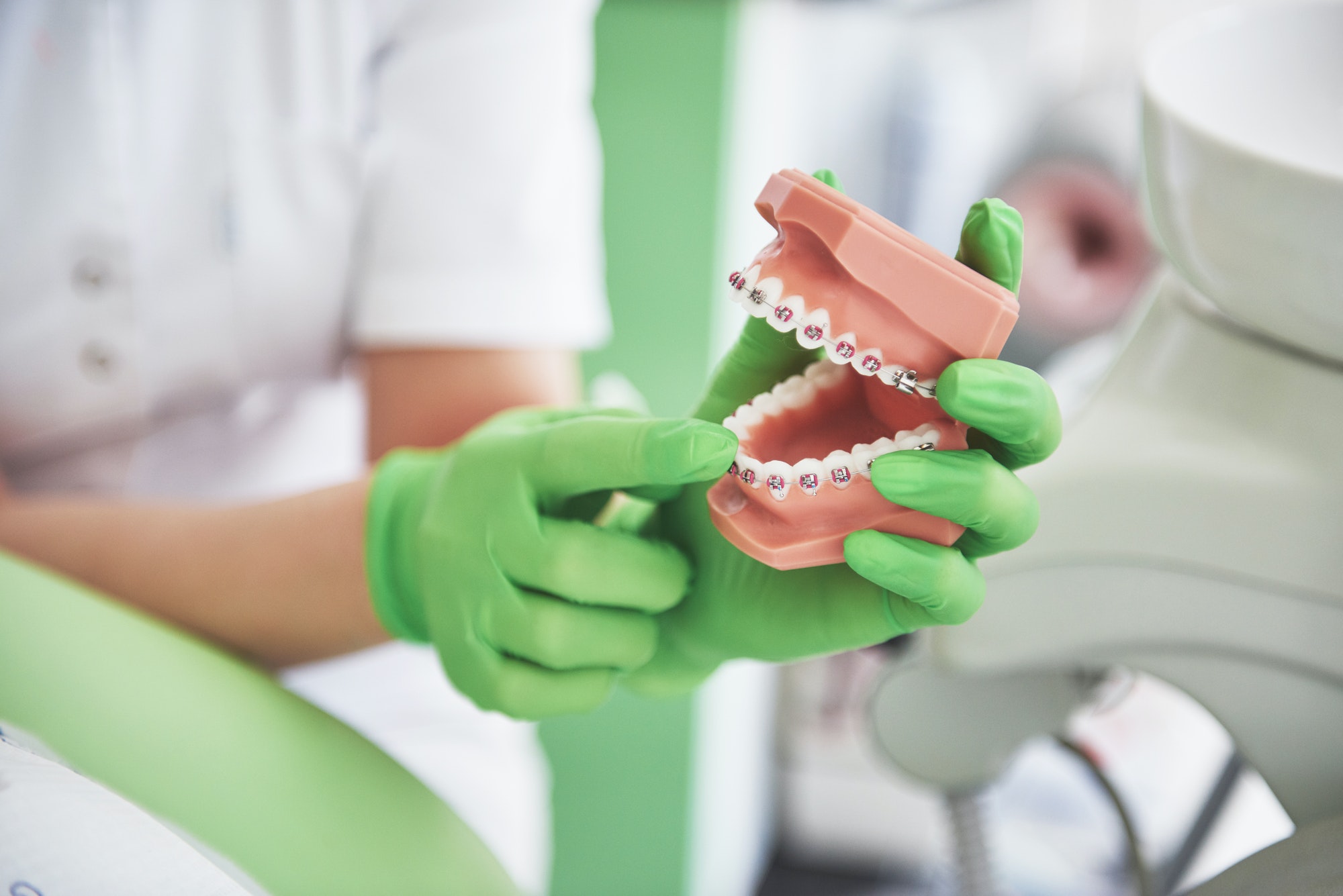
If you have crooked teeth or a misaligned bite, an underbite or an overbite, there are a number of treatments that can straighten them, including braces and retainers. Many general dentists carry out basic alignment work, while orthodontists specialise in correcting irregularities of the teeth.
The dentist or orthodontist you choose will ask about your general health, carry out a clinical examination, take impressions of your teeth, photograph your face and teeth, and arrange X-rays of the mouth and head. The treatment plan is drawn up from all of that together.
In some cases a removable retainer is all that is needed. Occasionally, where there is an extreme overbite or underbite, surgery may be involved. In most cases, however, braces are the answer.
What types of braces are available?
If braces are the right solution, your dentist will prescribe an appliance suited to your particular needs. It may consist of bands, wires and other fixed or removable components. No single method works for everyone.
Braces work by applying continuous gentle pressure over a period of time, slowly moving teeth in a particular direction. As a tooth moves, the bone around it changes shape to match.
What braces are made of
- Brackets are the small squares bonded to the front of each tooth, or attached to orthodontic bands. They act as handles, holding the archwire that moves the teeth. They come in stainless steel and in tooth-coloured ceramic or plastic, which are less noticeable. Occasionally brackets are fixed to the back of the teeth to hide them from view.
- Orthodontic bands are stainless steel, clear or tooth-coloured, and are cemented around a tooth to anchor the brackets. The clear and tooth-coloured options look better but cost more, and are not needed for every patient. Some people have brackets only.
- Spacers are separators fitted between teeth to create a small gap before the bands are placed.